Back
What’s the difference between saving and investing?
⏱️  2 min read

Whenever you receive money – whether it’s a birthday gift from a family member or a pay cheque from a job – do you set aside some of that money to spend at some future date?

Whatever that goal is, the act of putting aside part of the money you receive is what is referred to as saving.

Getting into a savings habit is a fantastic starting point for you to reach your financial goals and build resiliency against uncertainty. It’s also an important step on the path to the responsible management of your finances, along with monitoring your expenses, paying down debts and creating a budget around your wants and needs.

Most people place their savings in savings accounts at a financial institution, such as Oaken Financial. In a savings account, your money is safe, easily accessible and covered by CDIC insurance up to applicable limits. It can even earn some interest.

For tax purposes, the two main types of savings accounts are registered savings accounts and non-registered savings accounts. The main difference between the two is that registered savings accounts, when opened within registered plans such as Tax-Free Savings Accounts (TFSAs) and Registered Retirement Savings Plans (RRSPs), have tax benefits. For example, within an RRSP, you defer taxes on your deposits and earnings until withdrawal. Within a TFSA plan, earnings are tax-free. However, registered savings accounts have annual contribution limits and other restrictions that Canada Revenue Agency may impose. Meanwhile, non-registered interest earning savings accounts don’t have tax benefits but are more flexible with deposit amounts and withdrawals.

Making your money work for you

If you are saving for a long-term goal and want to earn more than the interest from a savings account, you’ll need to consider investing it. Investing is ideally for the money you won’t have an immediate need for.

According to the Financial Consumer Agency of Canada (FCAC), it’s important to figure out what savings and investments are right for you and to consider the following before investing your savings:

  • Your financial situation
  • Your financial goals
  • How long you want to invest for
  • Your risk tolerance

Back
Vacation? Retirement?
What’s your financial goal?
⏱️  2 min read

Having a financial goal is a powerful motivator to help you figure out your savings and investment strategies.

Think of financial goals as the X on a treasure map. Your buried treasure can be as small as a new laptop or as grand as a vacation in Italy. It can be for something tangible like a new car or something a little more abstract, such as making sure you have enough money when you retire.

Getting to your buried treasure takes more than following a dotted line. It involves getting your compass bearings, scoping the landscape and understanding which tools you need to both overcome obstacles and unearth the treasure chest.

In the same way, reaching your financial goals involves creating and sticking to a budget, creating savings strategies, understanding investment types and being disciplined and patient. It also means being accountable, tracking your progress and building momentum.

A good approach to setting goals is using the SMART method – that is, making sure the goal is Specific, Measurable, Achievable, Relevant and Time-Bound.

For instance, here’s how you can use the SMART method for a goal of buying a car:

Specific
I want to save X amount to buy a new car.
Measurable
If I save and invest X amount every month, I should be able to buy a car in X amount of time.
Achievable
After reviewing my income and budget, I know that the amount I need is within my means.
Relevant
I need a new car every five years to improve my quality of life.
Time-bound
I will reach my goal in X amount of time.

Back
Using GICs for Your Financial Goals
⏱️  2 min read

You have a financial goal in mind and are ready to take the next steps to invest your money to reach that goal. One safe and secure way to grow your savings to consider is a Guaranteed Investment Certificate (GIC).

With a fixed-rate GIC, you’ve guaranteed the return of the money you’ve invested (the principal) and also the interest you will earn on that investment. The GIC interest rate is locked in (or fixed) when the GIC is purchased and no matter what happens during the GIC’s term – whether GIC rates increase or decrease – the interest rate of your purchased GIC will not change.

What are the key factors that affect the GIC rates?

GIC interest rates are generally influenced by the Bank of Canada’s benchmark policy interest rate, market conditions, such as inflation and economic growth, and competition among financial institutions. It is important to note that GIC rates are not the same as the Bank of Canada’s benchmark rate; these are two entirely different interest rates and will likely differ in the actual set percentage.

The pros of GICs

  • GICs are eligible for deposit insurance under the Canadian Deposit Insurance Corporation (CDIC) up to applicable limits.
  • You can hold GICs within a non-registered or registered savings plan
  • You can choose redeemable or nonredeemable GICs. Non-redeemable GICs lock in your funds, which can help prevent you from spending your money impulsively.
  • There are generally no fees when buying a GIC or when cashing them in at maturity.

Let’s look at some financial goal scenarios and how GICs make the target goal more attainable.

Disclaimer: The estimates used in these scenarios are for demonstration purposes only and do not reflect current rates.

✈️ Roundtrip plane tickets to Rome

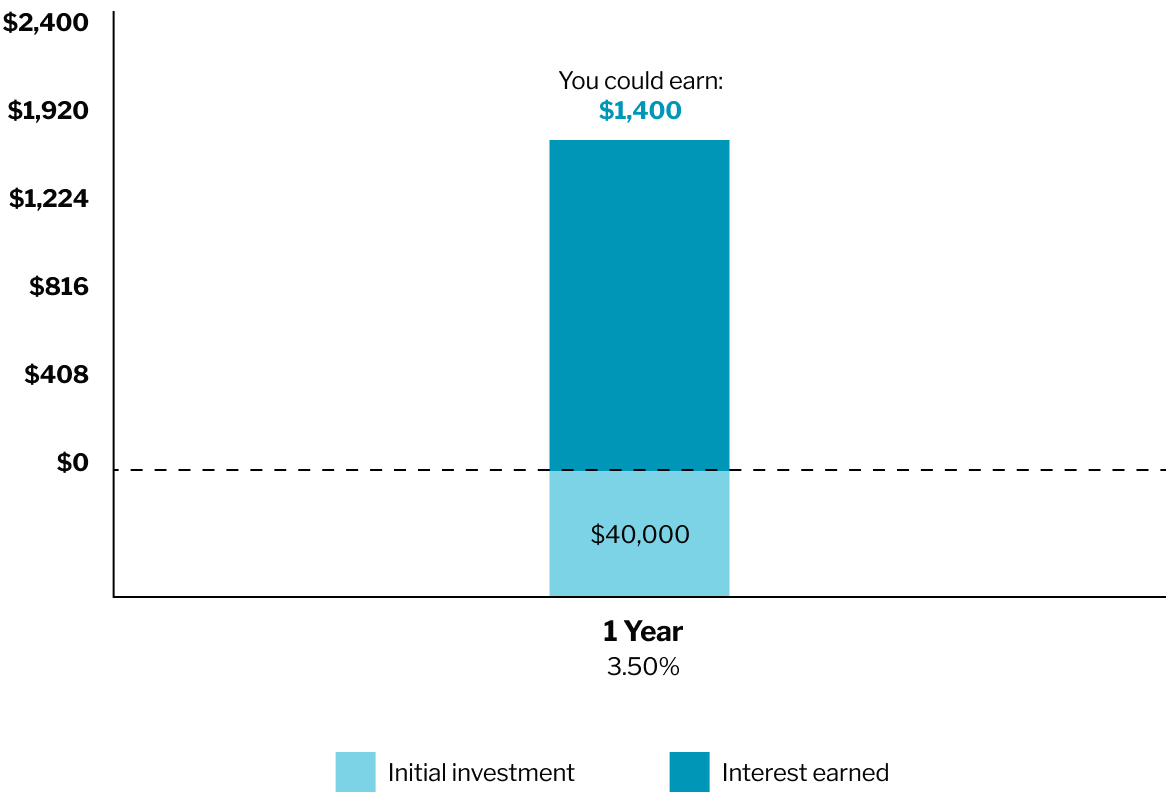
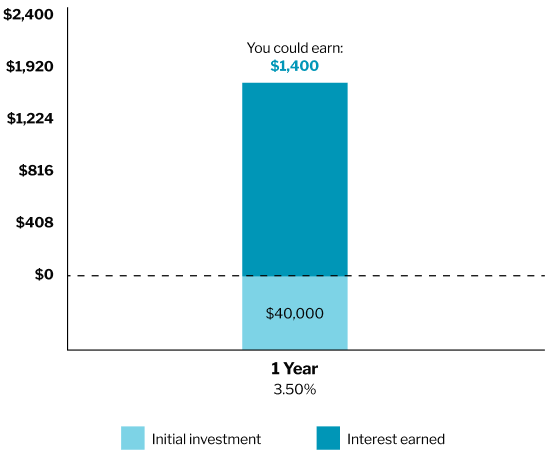
Mario is planning a trip to Europe with some university friends next year. After checking online, he finds that a roundtrip ticket to Rome costs around $1,400. He has around $40,000 in bonuses from his job at a successful tech firm and plans to invest it and use the return from his investment to buy a ticket next year.

🤑 Investment
$40,000
🎯 Goal
$1,400 for roundtrip plane ticket to Rome

Here’s how much Mario can potentially add to his initial $40,000 investment in a 1-year GIC at Oaken Financial.

🛋️ Furnishings for new home

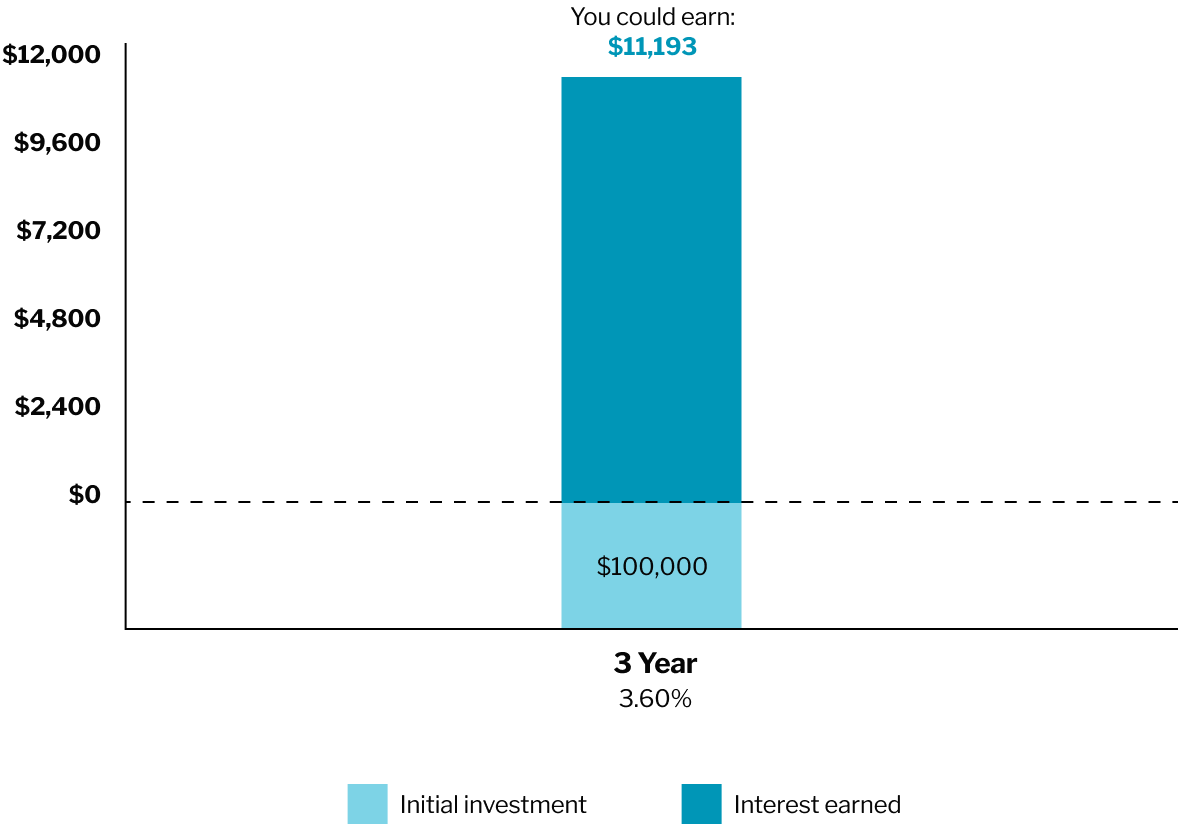
Young couple Greg and Nancy married earlier this year and received a total of $100,000 as gifts from their families. While they eventually intend to use the money as a downpayment for a new condo, they are currently content in the rented apartment they share and won’t be entering the real estate market for at least three years. However, when they eventually move to their new home, they want to be able to buy new furniture and appliances that they estimate to cost around $10,000.

🤑 Investment
$100,000
🎯 Goal
$10,000 for new furnishings for new home

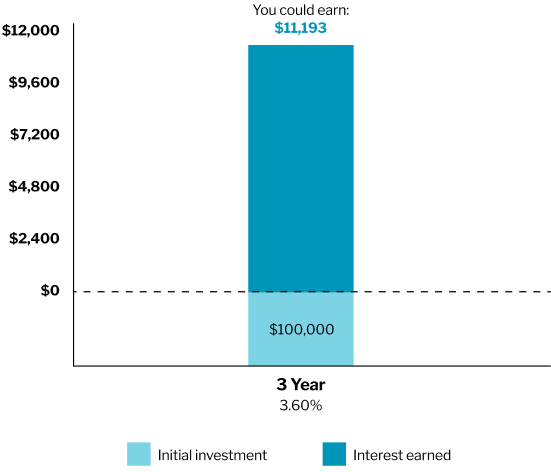
Here’s what Greg and Nancy can earn if they invest that $100,000 in a 3-year GIC at Oaken Financial.

🚗 New vehicle to ride the open road

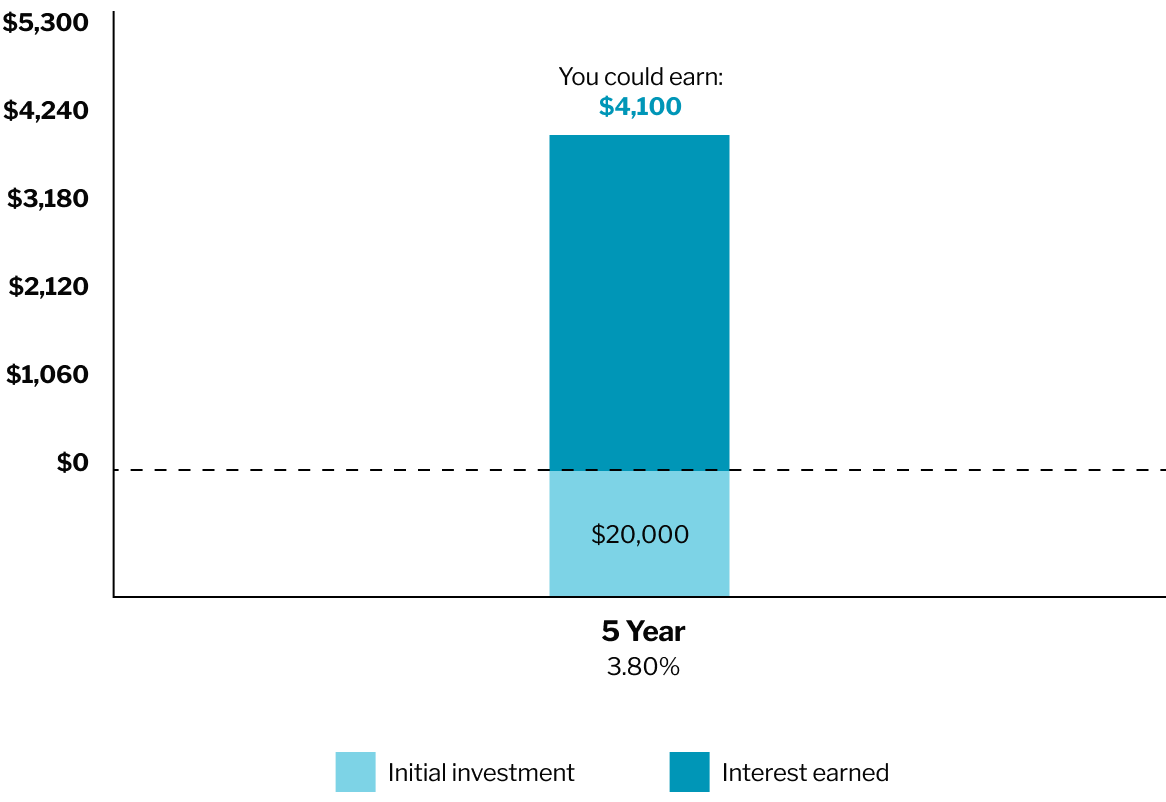
In five years, Rahul wants to replace the car his parents gave him in university with a new one. After some inquiries at his local car dealership, he discovered that a car model he’d been eyeing would cost around $30,000. Working as a stockbroker in a financial institution, Rahul has saved around $20,000 from bonuses over the last three years – an amount he intends to invest in a GIC to help him toward buying that car. 

🤑 Investment
$20,000
🎯 Goal
$30,000 for a new car

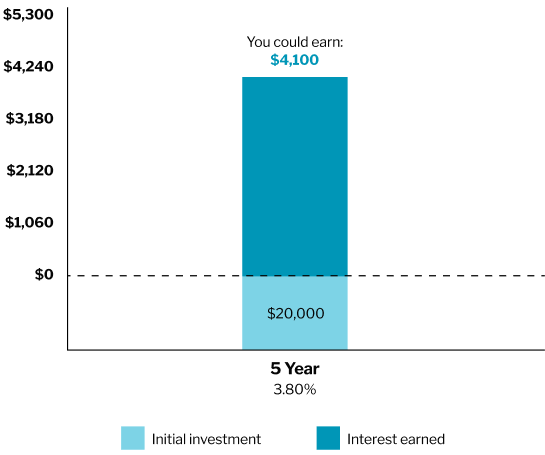
Here’s what Rahul can put towards the downpayment for a new car if he invests that $20,000 in a 5-year GIC at Oaken Financial.

Back
Kick off your money game with these savings and investment strategies.
⏱️  2 min read
  1. Take the time to understand your finances

The first step to effective saving is having a good grasp of your income and expenses. Understanding your finances will show how much you spend each month compared to your income, allowing you to see where you can reduce costs and how much you can realistically put away as savings.

  1. Create a budget – and stick to it!

When you feel you have a good understanding of your financial situation, you can now set a budget that helps you manage your money. The key to a smart budget is to identify your needs (things that are necessary, required or essential, such as food and housing) and wants (things that you’d like, but don’t really need) and plan around them.

  1. Zero in on your financial goals

Whether it’s a new car, or just a rainy-day fund, identifying and writing down your goals can help keep you motivated with your savings and investment strategies.

  1. Get into the savings habit

Actively saving a portion of your income is a good habit that can keep you on track to meeting your financial goals. Saving also gives you an emergency fund that can free you from the stress of unexpected expenses. A recurring transfer is an easy way to build your savings by automatically transferring a portion of your income in your chequing account to a savings account, helping you build your savings consistently.

  1. Diversify your savings with GICs

Now that you know your goals and have savings, think about how to best use your savings in investments to grow your savings towards your goals. One option is investing in Guaranteed Investment Certificates (GICs) – a secure and low-risk option that is insured by the Canadian Deposit Insurance Corporation up to applicable limits.

  1. Look into laddering your GIC investments

GIC laddering means dividing your initial investment into different portions, investing each portion in a different term. As each of these GICs matures, you can have access to the money if needed or buy a new GIC. This strategy gives you better access to your money and reduces the influence of interest rate changes on your portfolio.

;